Health Promotion Campaigns Fall Flat When They Ignore the Depths
Nov 5, 2025
Mark Gibson
,
UK
Health Communication and Research Specialist
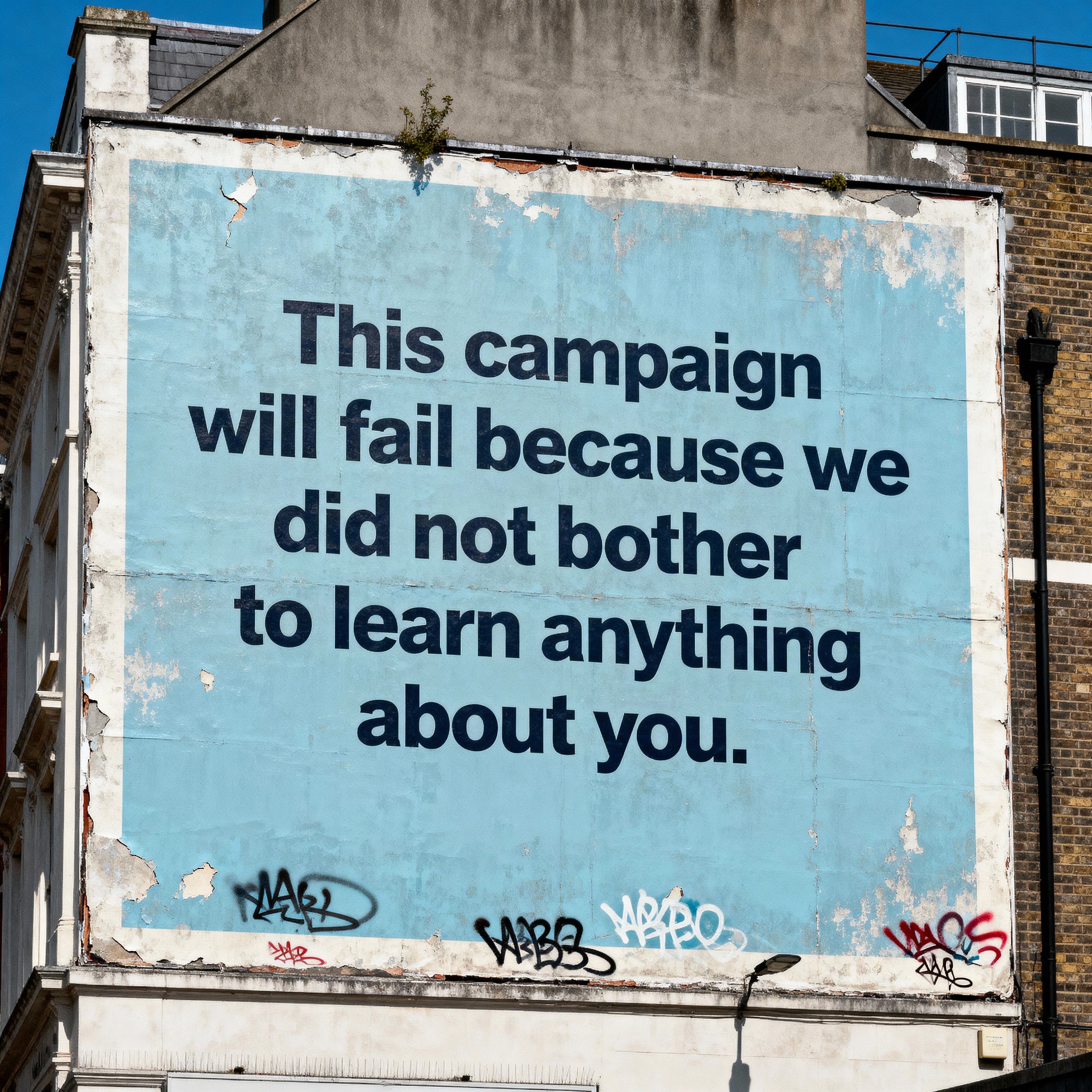
In a world of public health, the road to perdition is full of good intentions. Campaigns aim to inform, motivate and nudge people towards healthier choices. They urge us to eat better, move more, quit smoking, drink less and seek help when we are sick. Nobody sets out to develop a bad health promotion campaign. Yet, despite clarity and clinical accuracy, a lot of health promotion fails to resonate where it matters most: in the lives of people they aim to serve.
Why?
One explanation requires us to revisit the iceberg metaphor. What we see above the waterline represents only a fraction of what drives human behaviour. Below lies the submerged, less visible, but vastly more influential landscape of beliefs, emotions, values, norms and metaphors. And within this hidden terrain lives the sublime. This is the overwhelming, inexpressible depth of human experience that entails awe and disorientation.
Many health promotion campaigns never reach these depths. They don’t even get close. They skim the surface, offering evidence-based tips and urgent reminders, while failing to speak to the symbolic, emotional and cultural frameworks that shape people’s lives. As a result, they often fall flat. This is not because the message is wrong, but because the delivery is disconnected from the worldviews of those it is meant to help.
The Sublime in Health Communication
The sublime in this context does not refer to something merely poetic or grand. It refers to what is immense, unseen and emotionally resonant. This is the part of cultural experience that defies easy articulation but profoundly shapes perception and behaviour. This includes how individuals interpret illness, make decisions, express suffering and seek healing.
Campaigns that do not engage with the sublime risk being clinically precise but culturally tone-deaf. The remainder of this article looks at why this might be the case.
· Food, Emotion and Cultural Memory
Health campaigns often promote messages like “eat five fruit and vegetables a day” or “reduce saturated fats”. It fails to connect because food for many people is ritual and comfort. It might represent home, family, celebration and survival. A campaign that tells South Asian communities to stop cooking with ghee may be sound from a scientific point of view, but if it doesn’t acknowledge the emotional and cultural ties to that practice, it can feel intrusive or alienating.
The disconnect: food is part of the sacred rhythm of life. Reducing it to nutrients ignores its meaning.
· Linear Time versus Cultural Time
Western health messaging often reflects a linear, goal-oriented, time-is-money worldview: “Act now”, “Book your check-up today”, “Change before it is too late.” These messages assume people are free agents managing their own schedule with precision.
But in many cultures, time is cyclical, relational and even spiritually directed. Decisions are made when the time feels right and not just when the calendar or a health promotion campaign says so. A patient might be waiting for a family elder’s blessing or for a religious holiday to pass before deciding to act.
The disconnect: when campaigns ignore these rhythms, they appear rushed or pushy.
· The Language of Health and the Metaphor of Illness
Many campaigns rely on literal, clinical language: “Get screened”, “Know your status”, “Manage your condition”. But many people do not think or speak about illness this way.
In some communities, illness may be seen as a spiritual punishment, a family burden or a test of faith. Language might include metaphor (“feeling blue”, “my heart feels heavy”) rather than direct symptom naming. Campaigns that do not speak this language of meaning risk being irrelevant or even offensive.
The disconnect: Literal translations miss the emotional logic of lived experience, as are inappropriate application of metaphors.
· Autonomy as a Cultural Assumption
A major pillar of health promotion is individual empowerment. Campaigns encourage people to “take charge of your health”, “make your own decisions”, and so on. These are built on the Western ideal of the autonomous individual. But in many cultures, the self is relative and relational, embedded within family and community structures. Acknowledging that health decisions may be made collectively and deference to authority, such as elders or doctors, is seen as wise.
The disconnect: Promoting autonomy can feel like promoting isolation in some cultures.
The Sublime-Aware Campaign
True cultural influence lives below the surface in values, metaphors, assumptions and emotional codes. In healthcare, failing to engage with these deeper elements can turn well-meaning campaigns into noise. People don’t ignore messages because they do not care. Often, the message simply does not fit the framework through which they understand the world.
What would a sublime- aware campaign look like?
· It begins with listening, not prescribing. Bottom-up and not top-down. It begins with community engagement, fact-finding, gaining an inside track into cultural values, how health and illness are viewed and what the expectations of what a campaign would look like for that community.
· It uses narrative and metaphor, not just instruction. It puts a premium on storytelling as a tool to teach and learn.
· It understands the communication styles of the target culture.
· It thinks about the rhythms, rituals and symbols that matter, such as linking health checkups to meaningful community events or holidays.
· It respects collective decision-making, by involving families and spiritual leaders in messaging.
· It seeks to understand silence and hesitation as having meaning and not as ignorance or resistance.
Reimagining Effectiveness
The goal of health communication is not just clarity. It is also connection. A campaign that reaches someone emotionally and culturally will do far more than one that simply delivers facts. Or one that has a source translation anchored in the source culture and translated into target languages (but not target cultures) in a lazy one-size-fits-all approach.
All too often, success is measured in clicks, views and awareness levels. However, the deeper metric should be resonance: Did this message make sense in the recipient’s world? Did it honour their way of understanding health? Did it make them feel seen? Did it move them to act?
This is what the sublime teaches us. That, we, human beings are not just information processors. We need meaning. And health promotion that fails to acknowledge that will always struggle to do more than scratch the surface.
Thank you for reading,
Mark Gibson
Leeds, United Kingdom, May 2025
Originally written in
English